
Ngorongoro is a conservation area with people living in it, and a vast volcanic caldera whose floor you visit for the day. It is not a national park you sleep inside.
- Kind
- Conservation area
- Managed by
- Ngorongoro Conservation Area Authority
- UNESCO
- Mixed World Heritage since 1979
- Crater visit
- A daytime descent with a guide
- Sleep
- On the rim, or in Karatu
- From Arusha
- About half a day by road
A caldera, and a lived-in landscape
The Ngorongoro Crater is the floor of a collapsed volcano, a caldera whose rim sits high above a flat bowl of grassland, swamp and a soda lake. UNESCO describes it as the world's largest unbroken, unflooded caldera, and listed the wider conservation area in 1979. The Ngorongoro Conservation Area Authority (NCAA) manages it, not TANAPA.
That difference matters. This is not an empty park. People live here, herd cattle, and use the highlands. Olduvai, or Oldupai, Gorge, where so much early human evidence was dug, is in the same conservation area on the road toward the Serengeti. A crater day and a gorge stop are often on the same drive. They are not the same visit. The gorge is stones and a small museum. The crater is animals.
A day on the floor
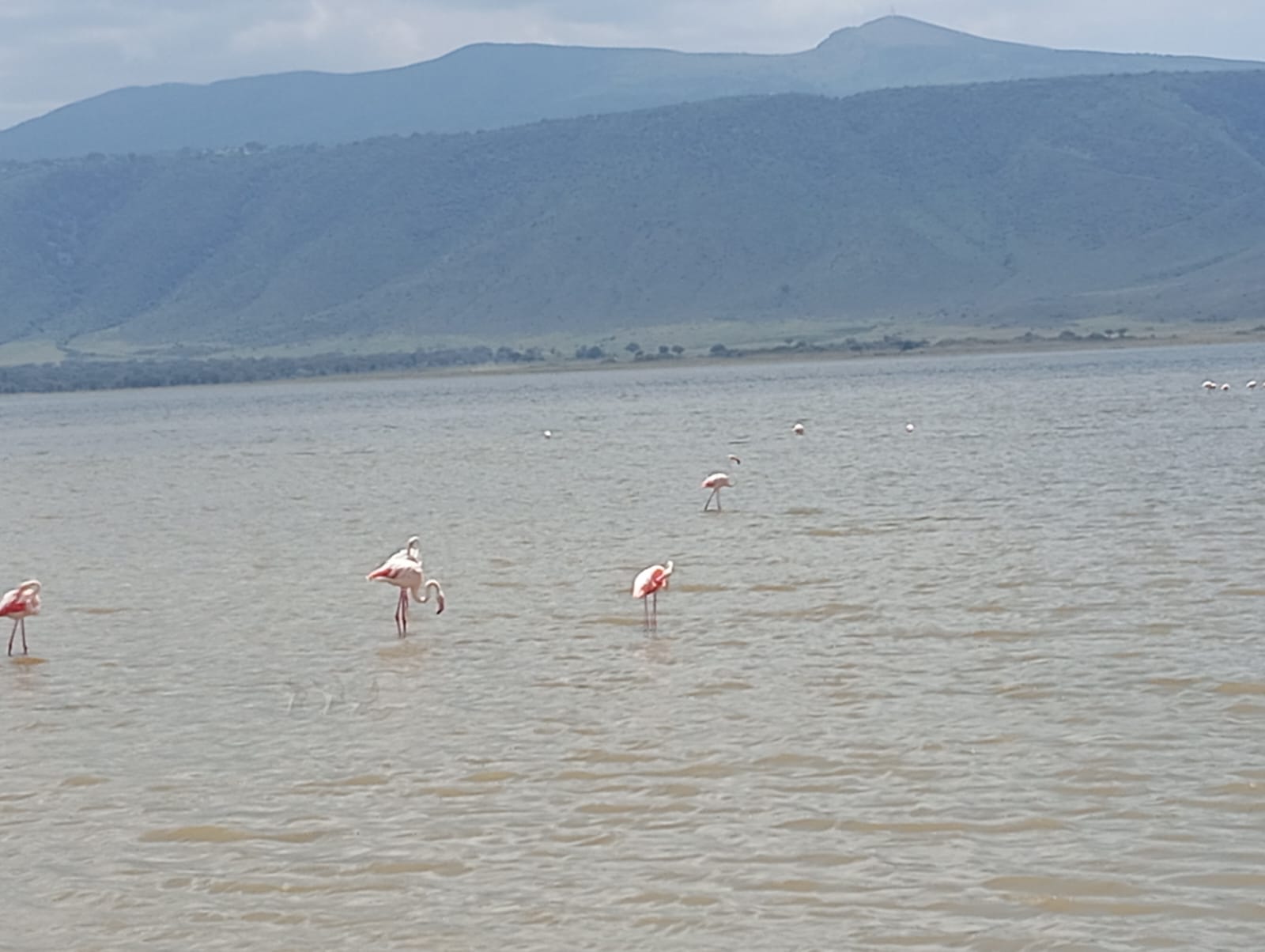
You sleep up high, where it is cold at night, and drop down a steep road in the early morning. The floor is compact. In a few hours a guide can move from open grass, where zebra, wildebeest and buffalo graze, to the hippo pools, the Lerai forest edge, and Lake Magadi, which often holds flamingos. Lion and spotted hyena are common. Black rhino are present and are the animal people ask for.
The NCAA requires a guide with crater visitors, and it sets vehicle and speed rules. Keep to the tracks. Do not expect to get out and walk. Picnic sites are designated. By mid-morning the popular sightings have a queue of vehicles. Starting early is the whole trick, and it is why a rim lodge or a Karatu hotel with a short drive beats a lodge that makes you leave at nine.
The floor can be misty, then hot. The rim is montane forest and is much cooler. Pack a layer for dawn and something you can take off by noon.
What lives here
The authority publishes wildlife figures, and they move with rain and with counting method. We do not print a head-count as if we had censused the crater. What we will say is the shape of the place: a lot of large animals on a small, open floor, which is why a single morning works at all.
Elephant are here, often in the forest on the walls and sometimes down below. The black rhino population is small and protected. Seeing one is a highlight, not a term of the booking. If you have already done the crater and want a more deliberate rhino visit, look at Mkomazi, where viewing is arranged inside a sanctuary rather than hoped for on a game drive.
When to go
The crater is open all year. June to October is drier and busier. The grass is shorter then, which makes animals easier to see, and the roads are kinder. December to February is green and still busy. March to May is wet, cheaper to travel in the sense that fewer people are around, and the descent road can be slow.
The crater does not host the great migration the way the Serengeti does, though herds pass the wider conservation area. Book it as a floor full of resident animals, not as a migration park.
BestGoodQuieter or wetter
Where it sits in a safari
Almost every northern-circuit itinerary uses Ngorongoro as the hinge. You drive up from Lake Manyara or Karatu, sleep, descend at dawn, and either return toward Arusha or continue to the Serengeti. One crater morning is enough for most people. A second morning is for someone who missed a rhino and has the patience. It is rarely worth a third.
The drive from Arusha is about half a day, longer if you stop at Manyara or at a coffee farm. Do not pair a crater descent with a same-day Serengeti game drive and call it relaxed. The distances are real.
Packages that include Ngorongoro Crater
These are the trips in our list that spend time here. A price is the starting price of that trip. A sample trip is a plan we can run. The camps and the price are confirmed when you ask.
-
 Ngorongoro Crater 1-day trip1 day · from $220
- 7-Day Tanzania Northern Circuit Safari7 days · from $3,290
Questions people ask
- No. It is a conservation area. Maasai communities live and graze livestock here, which is part of why UNESCO lists it as a mixed site, for nature and for human history. The crater is the famous piece of a much larger area.
- Plan on a day visit. Lodges and camps are on the rim, in Karatu, or elsewhere in the highlands. Descent is with a guide, in a suitable vehicle, and the descent roads are not an evening activity. Check the current gate hours with us before you travel. The NCAA publishes them and they can change.
- The crater is one of the better places in northern Tanzania to have a chance, because the floor is open and the animals are used to vehicles. It is still a chance. We will not sell you a guarantee.
- Often yes, because a morning on the floor shows a lot of animals in a small area. It is also busy. If you hate sharing a sighting with other vehicles, say so. A longer stay in the Serengeti is the quieter choice.
- The conservation area has its own fees, and the crater descent has a further service fee, set by the NCAA and charged per vehicle. Whether that is inside a package is written on the trip, not assumed. We do not copy the tariff onto this page because it changes.
References
The facts on this page were checked against these sources and written in our own words. Gate hours, fees and wildlife numbers change. We link the authority instead of printing a figure that will go stale.
- UNESCO World Heritage Centre, Ngorongoro Conservation Area
- Ngorongoro Conservation Area Authority
- NCAA visitor guidelines
- Ngorongoro Conservation Area, Wikipedia
Last reviewed 2026-10-28.