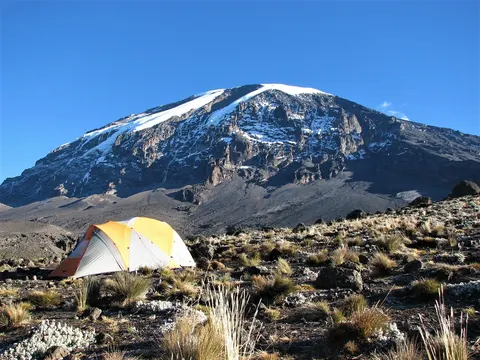
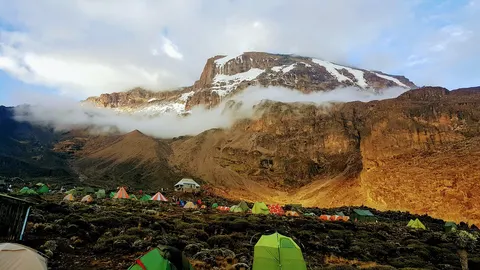
A quiet western approach with wildlife-edge forest and a slow, scenic build-up.
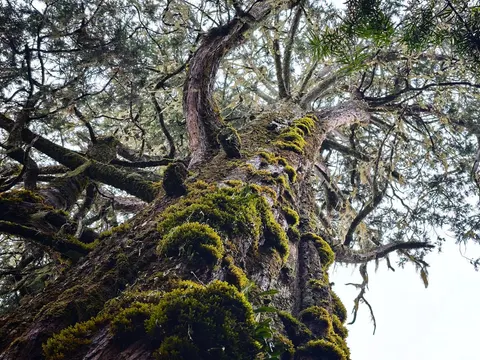
Lemosho starts at the far west of the mountain, where the trail is quiet and the first day might include a colobus monkey. It is longer than Machame, and most people who take it say the extra days were the point.
Days
7 or 8 on the mountain
Sleeping
Tents
Starts
Londorossi Gate, west
Finishes
Mweka Gate
Highest sleep
Barafu, about 4,600 m
Crowds
Quiet at first, busy after Barranco
What Lemosho is
Lemosho is the western approach. It begins past Londorossi Gate, on the quiet side of the mountain, crosses the Shira plateau, and then merges with the Machame trail near Lava Tower and Barranco. From there the two routes share the way to the summit and the descent to Mweka.
So the real difference is the first three days. On Machame you are in a stream of walkers from the first morning. On Lemosho you are in a forest that is mostly empty, then on a plateau that is wide enough that you stop noticing other groups. The mountain feels bigger.
Camp heights vary by source by around 100 m. We round them here and say so.
Lemosho route itinerary, day by day
Day one, the long drive. The road from Moshi or Arusha to Londorossi takes several hours, including a stop to register at the gate. After lunch you walk a gentle forest trail for a few hours to the first camp at around 2,700 m. Buffalo and elephant use this area, which is why an armed ranger walks with you on the first section. Ask what he has seen.
Forest to Shira. A long climb out of the trees onto the heath, with the plateau opening up as you rise. Shira 1 is about 3,500 m, and you can feel the height in your sleep.
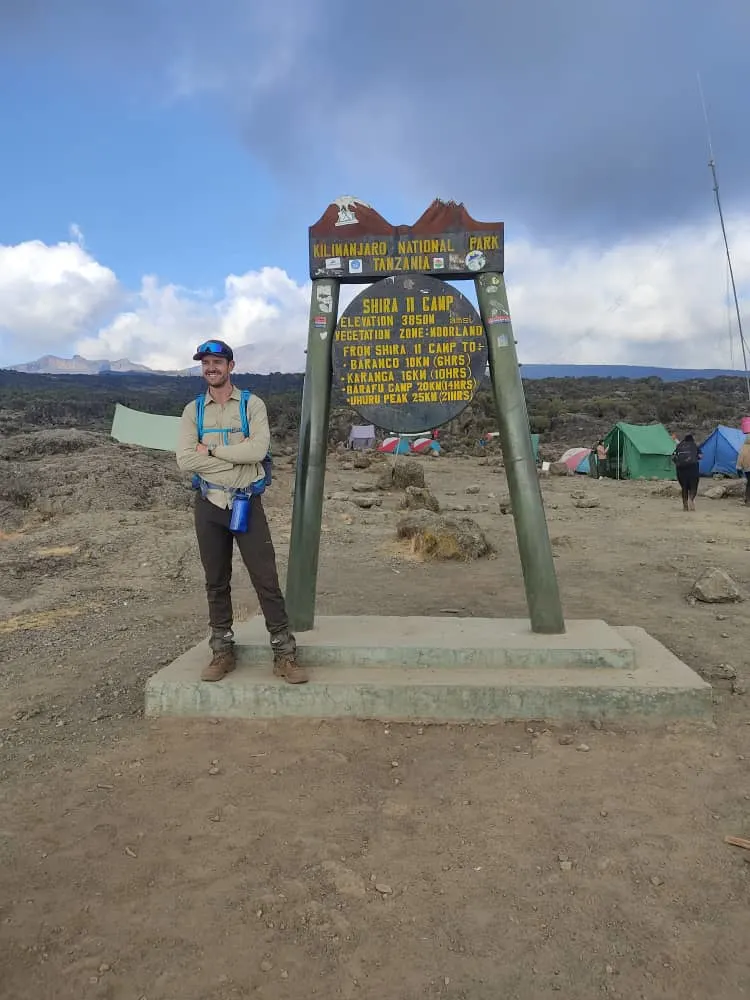
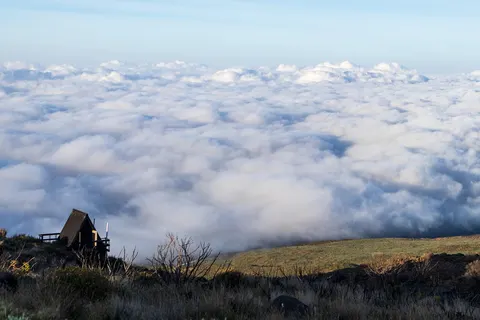
Across Shira. On the longer itinerary you spend a night at Shira 2 or walk across the plateau toward Lava Tower, depending on schedule. The plateau is flat, windy and huge. It is where people start to use the word 'moon' to describe the ground.
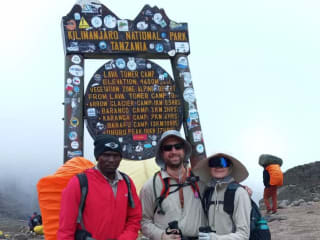
Lava Tower and Barranco. Same big day as Machame: up to about 4,600 m for lunch, then down to Barranco at around 3,950 m to sleep. Climb high, sleep low.
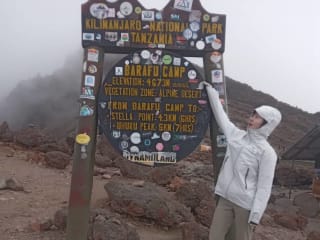
Barranco Wall, Karanga, Barafu. The scramble, the valley crossings, and the move up to the high camp. With eight days you sleep at Karanga first.
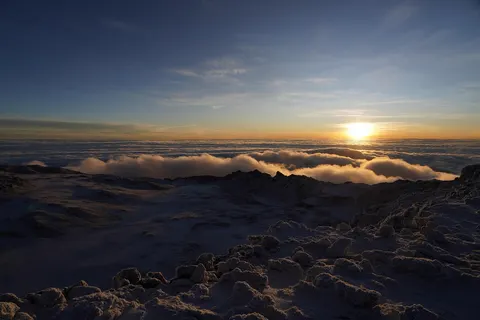
Summit and down. Midnight start, Stella Point at sunrise, Uhuru Peak shortly after, then the long descent to Mweka Camp and out the next morning. Same summit night as Machame. The difference is that you arrive at it with two or three extra nights behind you.
7-day Lemosho route schedule
The standard Lemosho itinerary: a drive to the trailhead on day one and a steady build-up over the Shira plateau.
Day 13 to 4 h
Londorossi Gate to Mti Mkubwa Camp
2,750 m · montane rainforest
Day 25 to 6 h
Mti Mkubwa Camp to Shira 1 Camp
3,500 m · montane rainforest to heath and moorland
Day 34 to 5 h
Shira 1 Camp to Shira 2 Camp
3,900 m · heath and moorland
Day 46 to 8 h
Shira 2 Camp to Barranco Camp
3,950 m · heath and moorland to alpine desert
Day 56 to 8 h
Barranco Camp to Barafu Camp
4,670 m · heath and moorland to alpine desert
Day 612 to 15 h
Barafu Camp to Mweka Camp
3,100 m · alpine desert to arctic summit zone to heath and moorland
Day 73 to 4 h
Mweka Camp to Mweka Gate
1,640 m · heath and moorland to farmland and forest edge
Not harder than Machame in a single day; easier in the sense that your body gets more time. The cost is days, not effort. It is also the route with the longest transfer, which some people find tiring before they have even started walking.
The weak spot is the same as everywhere: summit night. Long routes do not remove it. They just give you a better chance of facing it feeling well.
Quick take
Good: low crowds in the first three days
Good: forest wildlife and long plateau views
Good: slow profile that suits first-timers
Hard: a long drive on day one, and the early start
Hard: needs seven or eight days; six is rushed
Hard: it shares the busy trail with Machame from Barranco on
Seven days or eight?
Seven days is the standard. It is a good schedule for someone who is fit and has trained. Eight days adds a night near Karanga or on the plateau and is the one we suggest when you are nervous about altitude, are over fifty, or are doing the climb as part of a larger trip and want everything to go smoothly.
If you are choosing between Lemosho and Machame, read Machame or Lemosho. The short answer: if you have the days, Lemosho; if you do not, Machame at seven.
Lemosho route price and packages
What you pay depends on the number of days, the group size and the comfort level. The packages below show their own starting price per person from our live price list, and the cost page explains what moves it. Park fees are a large fixed part of any climb, which is why the cheapest quote is not always the best value.
+All meals on the mountain (breakfast, lunch, dinner)
+Experienced lead guide + assistant guide
+Hotel transfers
+Kilimanjaro National Park fees
+Pre-climb briefing & gear check
+Rescue fee / emergency evacuation insurance
+Transfers from Moshi ($2000) or Arusha ($2200)
Not included
-International flights
-Personal expenses and snacks
-Personal trekking gear
-Tanzania visa ($50 USD)
-Tips for guides and porters
-Travel & medical insurance (required)
Who the Lemosho route suits
First-timers who want the best-paced route. Walkers who dislike crowds. Photographers who want clean light across the plateau. People for whom the mountain is the main trip, not a few days of a larger holiday.
It is less suited to anyone with fewer than seven days or who would find the long road to the gate hard on a sore back. Consider Machame or Rongai then.
Best time to climb the Lemosho route
The same dry windows as the rest of the mountain: June to October and late December to early March. The lower forest on the west side is wet in the rains and cold in the dry months, so bring rain gear whenever you go. See best time to climb.
Packing notes for Lemosho
The Shira nights are cold and the plateau is exposed, so a warm insulated layer for camp is more important here than on shorter routes. See packing for Kilimanjaro for the full list. Insect repellent is worth carrying for the forest, and a pair of gaiters is useful for the wet lower sections.
Questions people ask
For most first-timers with the time, yes: it is quieter early on and gives your body more days. If you only have six days, Machame is the more realistic choice.
Sometimes, mostly in the lower forest on day one: colobus monkeys, blue monkeys, and signs of buffalo. An armed ranger accompanies the first section for that reason. Do not count on big animals.
Londorossi is on the west side of the mountain, a good way round from Moshi. Plan on a long morning of driving and a late-lunch start to the walk.
Yes. Shira and the high camps fall below freezing in the dry months. A warm sleeping bag rated well below zero is not an exaggeration.
Seven is the sensible minimum. Eight if you want the best margin. Six days is possible but cuts into the acclimatisation that makes Lemosho worth choosing.
Climbers who write trip reports often say the eighth day made summit night feel more manageable, because you spend an extra night near 4,000 m. If you are nervous about altitude, are older, or have spare days, take the eight. If you are fit, have recent altitude experience and are short of time, seven works.
Many people reach the top in their forties, fifties and sixties, and plenty are not athletes. What decides it is time and preparation, not youth: choose a long route (seven or eight days), train with hills and long loaded walks for at least two or three months, and walk slowly on the mountain. If you have a heart, lung or blood-pressure condition, see your doctor before you book.
It helps. Around a full moon the trail is visible without a head torch for much of the climb, and it feels less lonely and less cold. It also means more people choose those dates, so book earlier. Check the moon calendar for your month; you can still summit on a dark night with a good head torch.
Ask for the company's Tanzanian business licence and TATO membership, check them on the official register, and read recent reviews on more than one site. Ask how many people are in the crew and how porters are paid and equipped. A fair operator answers these quickly and writes the answers down.
A deposit that secures the date is normal. What matters is that the rest is paid by a clear rule, the receipt names exactly what is included, and the company is registered and reachable. Be careful with anyone who asks for the full price by bank transfer to a personal account.
Tips are a normal and important part of crew income. Guides, cooks and porters are tipped in a pooled way at the end of the climb, in local or US currency, with the group present. Ask your operator for their written tipping guideline before you go, so you can budget; see our tipping guide.
Acetazolamide is a prescription drug that some doctors recommend for altitude. It does not replace a slow ascent. Talk to your own doctor well before the trip, try it at home first if they prescribe it, and tell your guide you are taking it.
You cannot walk the mountain without a licensed guide, but you can book as one person and still have a full crew. Whether you join a group depends on whether other climbers are going on your dates; ask us and we confirm before you pay. See group climbs.
Facts on this page were checked against these sources and written up in our own words. Camp heights and times differ between sources by up to about 100 m and an hour; we give rounded figures.