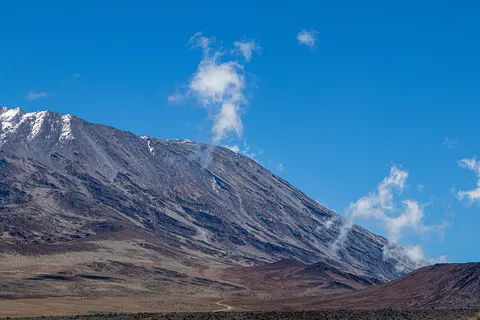
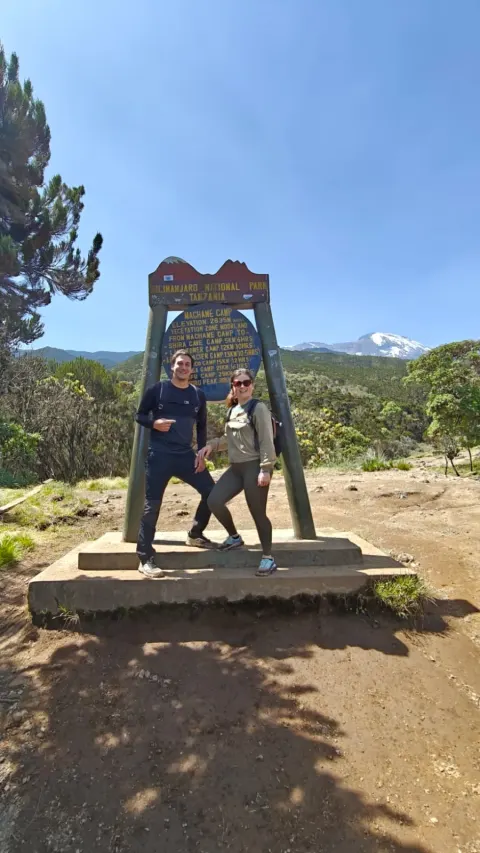
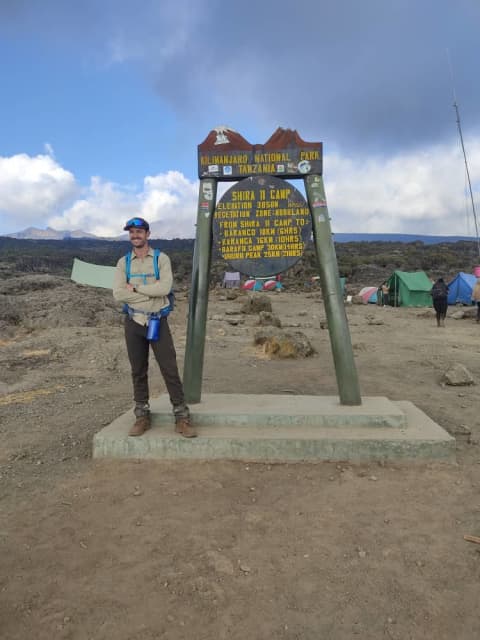
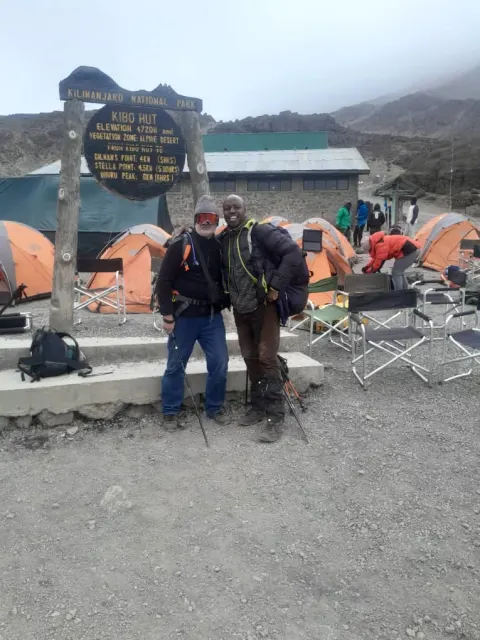
The classic route, with sleeping huts instead of tents.
Marangu is the hut route. You sleep in bunk beds, not tents. The trail is steady and the logistics are simple. It is also the route people underestimate most, because it has a reputation for being easy.
Days
5 or 6 on the mountain
Sleeping
Huts, shared bunks
Starts
Marangu Gate, south-east
Finishes
Marangu Gate (same way down)
Highest sleep
Kibo Hut, about 4,700 m
Crowds
Busy huts in peak months
What Marangu is
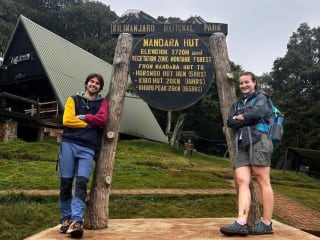
Marangu is the oldest of the routes and the only one with permanent sleeping huts: Mandara, Horombo and Kibo, in that order. You go up and down the same eastern trail. Guides sometimes call it the Coca-Cola route, a nickname for its easy reputation.
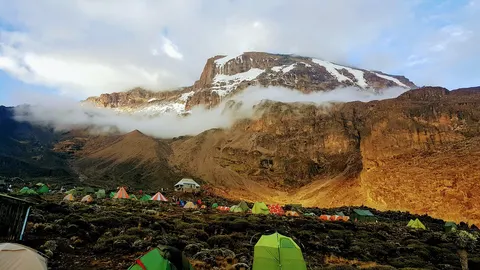
The huts are dormitories with bunk beds, mattresses and communal dining rooms. Mandara and Horombo have running water and toilets; Kibo is more basic. In busy months beds are allocated by the rangers, so you may share a room with other groups.
Figures in different guides vary by about 100 m. We round and say so.
Marangu route itinerary, day by day
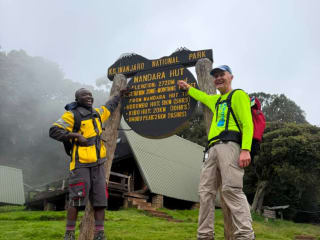
Marangu Gate to Mandara. A gentle walk through lush rainforest. Short enough to arrive in time for tea. A good first day and nothing more.
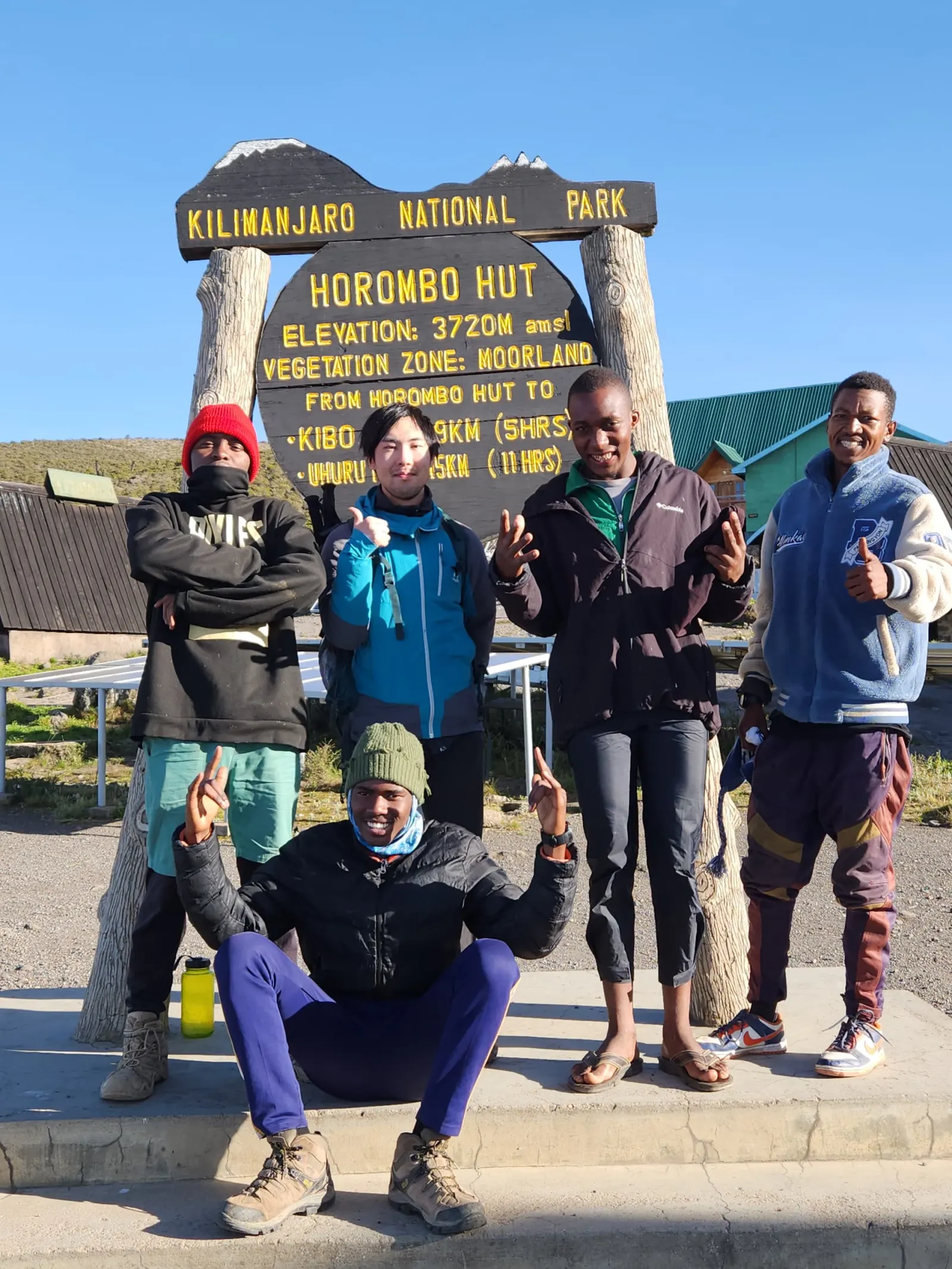
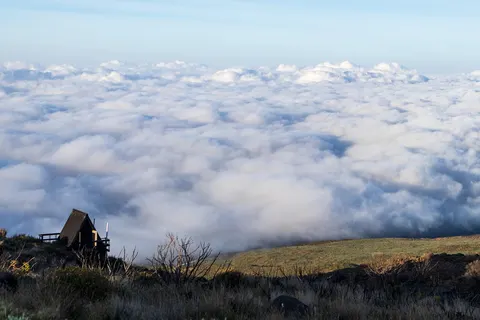
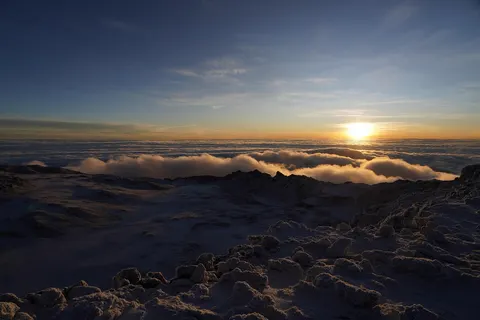
Mandara to Horombo. You leave the forest and cross moorland, with the broken peak of Mawenzi appearing ahead. Horombo is at about 3,700 m and has the best views of the whole route, particularly at sunset. This is the night when altitude starts to make itself known.
On the six-day version, a rest day at Horombo. You walk up toward Zebra Rocks or the Mawenzi saddle and come back down to sleep at the same hut. It is an acclimatisation day and one of the best bits of advice on the mountain. If you are doing five days, you do not get it.
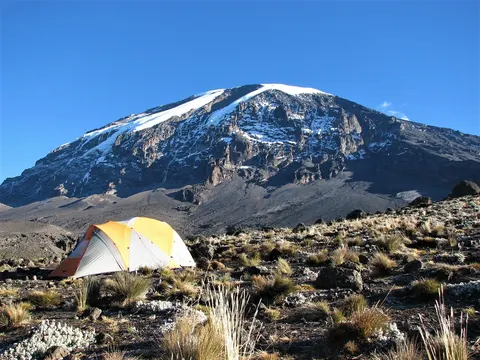
Horombo to Kibo. Across the Saddle, a high desert between Mawenzi and Kibo. It is bare, wide and windy. You reach Kibo Hut at about 4,700 m in the afternoon, eat early and try to sleep for a few hours. Most people do not sleep well at that height. Do not worry about it.
Summit night. You start around midnight, climb slowly up the scree to Gillman's Point on the rim, and then continue to Uhuru Peak. You then descend all the way back to Horombo, long and hard on the knees.
Horombo to the gate. The last day, down through moorland and forest, and then the drive back to Moshi.
5-day Marangu route schedule
The fastest option on this route. Every night is a climb, so it asks the most of your body for the time available.
Day 14 to 5 h
Marangu Gate to Mandara Hut
2,720 m · montane rainforest
Day 25 to 7 h
Mandara Hut to Horombo Hut
3,720 m · montane rainforest to heath and moorland
Day 35 to 6 h
Horombo Hut to Kibo Hut
4,700 m · heath and moorland to alpine desert
Day 412 to 15 h
Kibo Hut to Horombo Hut
3,720 m · alpine desert to arctic summit zone to heath and moorland
Day 55 to 7 h
Horombo Hut to Marangu Gate
1,860 m · heath and moorland to montane rainforest
The gradient is steady and the track is good, which is why people call it easy. But acclimatisation is the whole game on Kilimanjaro, and five days up and down is short. Many operators describe Marangu as the route with the least forgiving schedule, and we agree: if you do Marangu, do the six-day version.
Summit night is the same as everywhere. The route ends at the same crater rim as the rest; what changes is how well you have adjusted when you get there.
Quick take
Good: real beds and a roof, which matters when it rains
Good: steady gradient and a short trip to the trailhead
Good: usually the simplest to organise
Hard: five days is short for the height
Hard: you go up and down the same trail
Hard: huts fill in peak months and sleep is short before the summit
Five days or six?
Six, if you can. The extra night at Horombo is the most useful single day on this route. Five days is for people who are very fit, have recent altitude experience, or are strictly out of time.
Marangu route price and packages
What you pay depends on the number of days, the group size and the comfort level. The packages below show their own starting price per person from our live price list, and the cost page explains what moves it. Park fees are a large fixed part of any climb, which is why the cheapest quote is not always the best value.
+All meals on the mountain (breakfast, lunch, dinner)
+Experienced lead guide + assistant guide
+Hotel transfers
+Kilimanjaro National Park fees
+Mountain hut accommodation (A-frame dormitory cabins)
+Pre-climb briefing & gear check
+Price: $1,700 from Moshi / $1,800 from Arusha
+Rescue fee / emergency evacuation insurance
Not included
-International flights
-Personal expenses and snacks
-Personal trekking gear
-Tanzania visa ($50 USD)
-Tips for guides and porters
-Travel & medical insurance (required)
Who the Marangu route suits
People who would really rather not camp. Walkers who are anxious about cold nights or who want a hot meal at a table. People on a tighter budget, since huts keep logistics simple. Older climbers who like a steady pace and a roof.
If scenery variety matters most, look at Machame or Lemosho. If you want quiet, look at Rongai.
Best time to climb the Marangu route
The dry windows are June to October and late December to early March. Huts fill up in those months, so book early. In the rains the huts are a real advantage over a wet tent, though the trail is still slippery. See best time to climb.
Packing notes for Marangu
You still need a sleeping bag, because huts are cold and the blankets are not always what you want. Earplugs help in a shared dorm. A head torch is needed for summit night and for the hut toilets. See packing for Kilimanjaro.
Questions people ask
The gradient is the gentlest, but the short schedule leaves less time to adjust, which is the real challenge. Six days is much better than five.
Usually, yes. The huts are dormitories and beds are assigned by park staff. You may be with strangers in busy months.
No. There is water for washing at Mandara and Horombo, but not hot showers. Pack wet wipes.
Yes. The huts keep you dry in the evening. The trail will be muddy and the summit may be snowy.
Yes. Porters carry your main bag and food. You carry a day pack with water, a warm layer, rain gear and snacks.
Many people reach the top in their forties, fifties and sixties, and plenty are not athletes. What decides it is time and preparation, not youth: choose a long route (seven or eight days), train with hills and long loaded walks for at least two or three months, and walk slowly on the mountain. If you have a heart, lung or blood-pressure condition, see your doctor before you book.
Camps have basic long-drop toilets and many groups carry a private toilet tent on request. There are no showers; wet wipes and a small washing bowl brought by the crew are the norm. Bring a power bank, since charging points do not exist on the trail, and keep electronics warm so batteries last.
Tips are a normal and important part of crew income. Guides, cooks and porters are tipped in a pooled way at the end of the climb, in local or US currency, with the group present. Ask your operator for their written tipping guideline before you go, so you can budget; see our tipping guide.
Yes. Choose a policy that explicitly covers trekking to 6,000 m and emergency evacuation. Standard holiday cover often stops at a lower altitude. Read the exclusions before you buy and carry the policy number with you.
Ask for the company's Tanzanian business licence and TATO membership, check them on the official register, and read recent reviews on more than one site. Ask how many people are in the crew and how porters are paid and equipped. A fair operator answers these quickly and writes the answers down.
Facts on this page were checked against these sources and written up in our own words. Camp heights and times differ between sources by up to about 100 m and an hour; we give rounded figures.