
What Is Altitude Sickness? Altitude sickness (Acute Mountain Sickness, or AMS) occurs when your body ascends faster than it can adapt to reduced oxygen levels. Above 2,500m, the partial pressure of oxygen drops: your lungs take in less oxygen per breath and your body works harder to compensate. Most Kilimanjaro trekkers begin feeling AMS effects above 3,500m; it becomes serious above 4,500m.
What Is Altitude Sickness?
Altitude sickness (Acute Mountain Sickness, or AMS) occurs when your body ascends faster than it can adapt to reduced oxygen levels. Above 2,500m, the partial pressure of oxygen drops: your lungs take in less oxygen per breath and your body works harder to compensate. Most Kilimanjaro trekkers begin feeling AMS effects above 3,500m; it becomes serious above 4,500m.
Symptoms of AMS on Kilimanjaro
The classic HACE mnemonic helps remember the symptoms: Headache, Anorexia (loss of appetite), Chronic fatigue, Emesis (nausea/vomiting). In practice, early-stage AMS on Kilimanjaro looks like:
- Persistent headache (especially at night or on waking)
- Nausea or loss of appetite
- Fatigue disproportionate to exertion
- Dizziness when standing or changing position
- Disrupted, unrefreshing sleep
- Swelling in hands, feet, or face
If early symptoms are ignored, AMS can progress to High Altitude Cerebral Edema (HACE), brain swelling, or High Altitude Pulmonary Edema (HAPE): fluid in the lungs. Both are life-threatening and require immediate descent.
HACE vs HAPE: Know the Difference
HACE symptoms: Severe headache unresponsive to ibuprofen, loss of coordination (ataxia: the finger-to-nose test your guide should do), confusion, altered consciousness. HAPE symptoms: Persistent dry cough, shortness of breath at rest (not just during exertion), pink or bloody froth in severe cases. Both require emergency descent: do not wait for morning.
Who Gets Altitude Sickness?
This is the part most trekkers don't want to hear: there is no reliable predictor. Fitness level, age, gender, and prior high-altitude experience are poor predictors of AMS susceptibility. The only factor that consistently correlates with AMS risk is previous AMS: if you've had it before, you're more likely to get it again at the same altitude. The speed of ascent matters far more than fitness.
How to Prevent Altitude Sickness on Kilimanjaro
1. Choose a longer route
The Machame (7 days) and Lemosho (8 days) routes have significantly higher success rates than the Marangu (5 days) precisely because of their longer acclimatisation profiles. The Northern Circuit (9 days) has the best acclimatisation of any route. More days on the mountain = more time for your body to adapt = higher summit probability.
2. Climb high, sleep low
This is the principle behind the Lava Tower acclimatisation push on day 3 of the Machame route. You ascend to 4,630m, then descend to sleep at 3,960m. Your body adapts at the high point but recovers at the lower one. Never skip the Lava Tower detour: it is not optional.
3. Hydrate aggressively
Dehydration worsens AMS symptoms significantly. Drink 3–4 litres of water per day on the mountain. Altitude increases respiratory water loss: you breathe harder and lose more moisture with each breath. Avoid alcohol and minimise caffeine above 3,500m.
4. Walk slowly: pole pole
"Pole pole" (slowly slowly in Swahili) is not just a tourism cliché: it is altitude medicine. A slower pace reduces the rate of oxygen demand and gives your body more time to adjust at each elevation band. If your guide is walking fast, slow them down. You are not racing.
5. Consider Diamox (acetazolamide)
Diamox is a carbonic anhydrase inhibitor that accelerates acclimatisation by stimulating faster and deeper breathing, which increases blood oxygen saturation. It does not mask AMS symptoms: it helps prevent them. Standard dosage is 125–250mg twice daily, starting 24–48 hours before ascent. Consult your doctor 4–6 weeks before your climb. Common side effects: tingling hands and feet, increased urination, and a metallic taste in carbonated drinks.
What Your Guide Should Be Doing
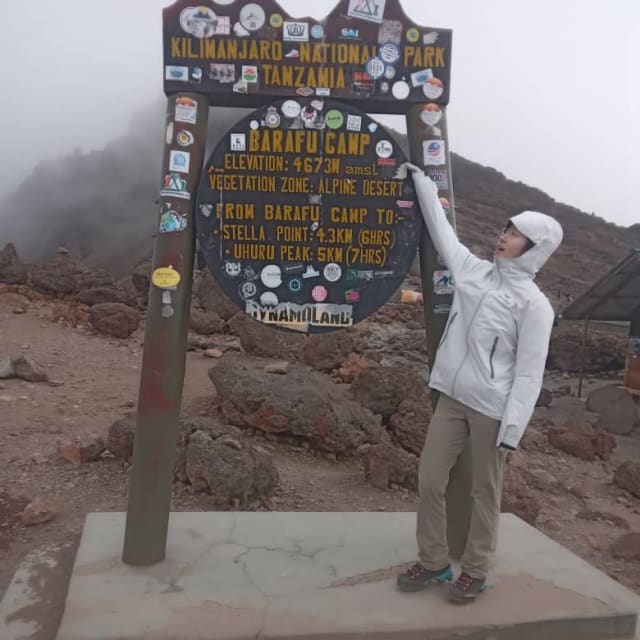
A responsible guide performs daily medical checks: oxygen saturation (SpO2) via pulse oximeter, resting heart rate, and the heel-to-toe walking test for coordination. Ask to see these readings each morning. Normal SpO2 at Barafu (4,640m) is 70–80%: below 60% is a serious warning sign. If your guide is not doing these checks, that is a red flag about the operator you booked with.
If You Get AMS: What to Do
The only treatment for moderate-to-severe AMS is descent. No medication, no extra oxygen, no willpower substitutes for losing altitude. The rule: never ascend with AMS symptoms. If your headache hasn't resolved after rest and hydration, descend 300–500m and reassess. A lost summit is recoverable. HACE or HAPE is not always survivable.