Skip to content
VISIT KILIADVENTURES
7-Day Lemosho Route Kilimanjaro From Arusha

7 days · Mount Kilimanjaro, Tanzania

7-Day Lemosho Route Kilimanjaro From Arusha

7 day Lemosho Route from Arusha: remote western Kilimanjaro approach with a wilderness forest start and the Shira Plateau. All-inclusive.

Duration
7 days
Highest point
5,895m (Uhuru Peak)
Group size
1–12 people
Difficulty
challenging
Where
Mount Kilimanjaro, Tanzania

Who runs this trip

About this trip

The 7 day Lemosho Route from Arusha balances quiet wilderness, scenery and acclimatisation on the way to Uhuru Peak (5,895 metres), the highest point in Africa. It approaches Kilimanjaro from the remote western side, starting at Londorossi Gate, and is one of the most scenic ways to climb the mountain.

The first part of the climb passes through montane forest that sees very few other trekkers. It is a genuine wilderness start: tall, moss-covered trees, dense undergrowth and birdsong, with the busier southern trails far away on the other side of the mountain. Leaving the forest, you climb onto the Shira Plateau, an ancient volcanic caldera that offers some of the finest above-treeline walking on any Kilimanjaro route, with Kibo's glaciated summit growing ahead of you and Mount Meru on the horizon behind.

The western approach is also gentle on the body. Lemosho gains altitude more gradually in the first days than many routes of the same length, which gives you a good acclimatisation profile before the higher camps. After the Shira Plateau the route joins the Southern Circuit, passing Lava Tower, the Barranco Valley and the Barranco Wall – a non-technical scramble – on the way to the high camp below the summit.

Summit night is the toughest part of the experience: a slow, cold climb in the dark to the crater rim and on to Uhuru Peak, reaching the top in the early morning. The descent takes you down Kilimanjaro's southern side, through moorland and forest, so you see a completely different landscape on the way out.

The 7-day Lemosho suits fit climbers starting from Arusha who want a quieter, more scenic climb and a well-paced itinerary. No technical climbing skills are required, but good fitness and preparation make a real difference.

This seven-day Lemosho starts from Arusha, which adds a longer transfer to Londorossi Gate on the first day than a Moshi start. The climb itself follows the same quiet western route: forest, the Shira plateau, Lava Tower, Barranco and Barafu, with a summit attempt around midnight. The itinerary here crosses the Shira plateau, goes over Lava Tower to Barranco, and then spends a night at Karanga, at about 4,000 m, before the high camp.

Arusha is a good base if you are arriving at Kilimanjaro International Airport or combining the climb with a safari, because most northern safaris also start there. The extra drive is the price of that convenience, and your guide will brief you on the day-one timing. As on every Lemosho, the first days are quiet and the later ones join the busier southern corridor. If your plans are flexible, ask about the eight-day version, which adds a further rest night.

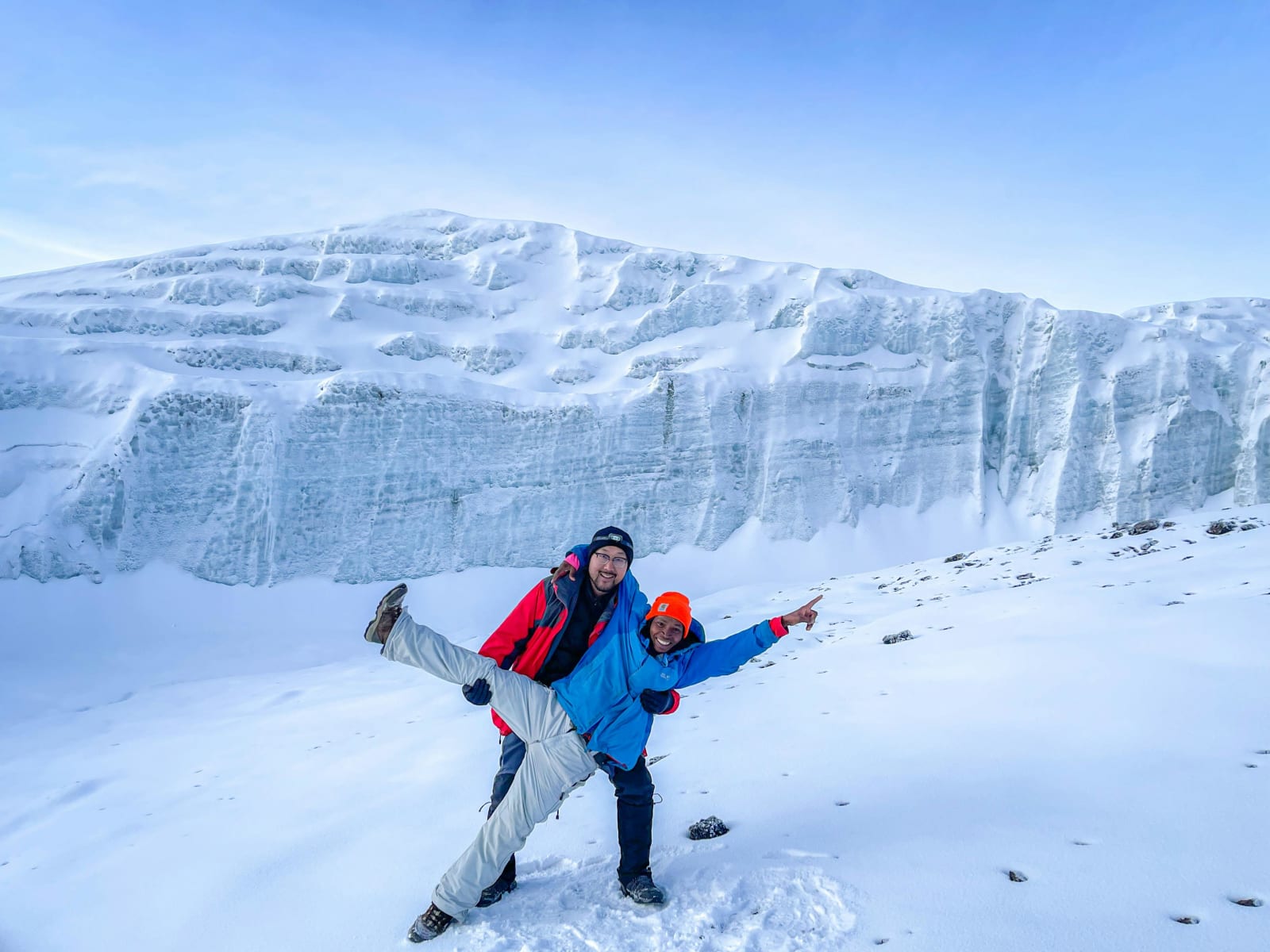
Altitude affects everyone differently, so no itinerary can promise the summit. A longer schedule gives more time to adjust.

The route in 3D

Camps, gates and the climb on real terrain.

Showing the Lemosho route only. Typical camps, not for navigation. Trail data © OpenStreetMap contributors. Open full map

Day-by-day itinerary

Times and camps can change with weather and group pace.

  1. Western entry point, remote rainforest hike. Buffalo and elephant possible. 9 km, 4–6 hours.

    Walking
    3 to 4 hours
    Climb
    up to 650 m
    Zone
    montane rainforest
    Meals
    included

    Times and heights are approximate and change with pace and weather.

Lemosho route day by day, in detail

What each stage of this package feels like. Heights are rounded and vary by source.

Day 1 · Morning

Londorossi Gate to Shira 1

After a long drive to Londorossi Gate and registration, a vehicle takes the group up a rough track as far as it can go, and the walk climbs through the upper forest and out onto the Shira plateau. Shira 1 is at about 3,500 m, so the first night is already at height.

Because this skips the lower forest, it is quicker but gives less gradual adjustment. Walk slowly, drink regularly and mention any symptoms early.

Day 2 · Morning

Shira 1 to Shira 2

A shorter day across the plateau, with an optional walk to Shira Cathedral, a lava formation on the plateau's edge. The terrain is open, windy and sunny, and the ground is bare volcanic rock and tussock. Shira 2 stands at about 3,850 m.

The short distance is deliberate: it lets the body adjust before the Lava Tower day. Rest, drink and keep warm.

Day 3 · Morning

Lava Tower and Barranco: the acclimatisation day

This is the day that does most of the work. You climb across the high moorland to the Lava Tower, a volcanic plug at about 4,600 m, stop for lunch, and then descend steeply to Barranco Camp at about 3,950 m. Going high and sleeping lower is the best natural help your body gets on the mountain.

Some people get a headache or feel nauseous at the tower. If that happens, tell your guide at once and do not push on; the descent usually helps. The valley at Barranco, with its giant senecio plants and the wall rising above camp, is one of the most memorable places on the route.

Day 4 · Morning

Barranco Wall to Karanga

First thing in the morning the group queues at the Barranco Wall, a rocky scramble that takes an hour or two. It uses your hands in a few places but is not technical, and the guides and porters know the footing well. Afterward the trail crosses the Karanga valley and climbs gently to the camp at about 4,000 m.

This is a short day on purpose. Rest, drink and eat. It gives your body a quiet night at height before the move to the high camp, which is why many guides prefer itineraries that include it.

Day 5 · Morning

Karanga to Barafu

A short climb of three to four hours takes you out of the Karanga valley and up the ridge to Barafu, at about 4,600 m. The ground is bare rock and scree, with Kibo's southern face above. You arrive in time for lunch and an afternoon of rest, which is the point: the day is kept light so you start summit night with energy.

Camp is cold, windy and exposed, and there is no water, so the crew bring it from Karanga. Check your gear, charge a power bank in your sleeping bag, and try to sleep from late afternoon.

Day 6 · Midnight

Summit night and descent

You are woken around midnight, drink something hot and start in the dark by head torch. The path is steep and zigzags up loose scree; the pace is very slow, with frequent pauses. It is freezing, often well below zero, and the hours before dawn are the hardest. Stella Point on the crater rim, at about 5,685 m, is where the sun usually rises and where many people cry.

From Stella Point it is a further walk along the rim to Uhuru Peak at 5,895 m, with glaciers and the crater floor beside you. You stay only briefly, take the photograph and turn back, because the descent is long: down the scree to Barafu for a short rest and on to Mweka Camp or Horombo depending on the route. The whole day often takes ten to fourteen hours.

Day 7 · Morning

Mweka Camp to the gate

The last morning is a few hours through forest on a well-made path, sore in the knees but easy in the lungs. Trekking poles are most useful here. At Mweka Gate you sign out, receive your summit certificate if you reached Stella Point or Uhuru Peak, and the crew gather for a farewell.

A vehicle then takes you back to your hotel, where you will want a hot shower. Tipping is normally done at the final camp or gate; your operator should give you a written guideline in advance.

What is included

Included

  • All meals on the mountain
  • Cook and camp crew
  • Full camping equipment
  • Kilimanjaro National Park fees and rescue fund
  • Lead guide + assistant guides
  • Moshi transfers
  • Personal porter per trekker
  • Summit certificate
  • Altitude medication
  • International flights
  • Personal gear
  • Tanzania visa
  • Tips
  • Travel insurance

Price

Starting price, per person

$2,495

  • Covers everything on the included list.
  • This example is for one traveller; for a group, multiply the price per person by the number of travellers. The card fee is added on the payment page, so the amount you pay there is higher than the deposit. Trips that start within 10 days are paid in full at booking, with no balance.
  • Group size: 1–12 people. Final price depends on group size and dates.
  • Budget separately for: Altitude medication; International flights; Personal gear; Tanzania visa; Tips; Travel insurance.

When to go

Jan to Febbest

Clear summit windows

Mar to Mayfair

Long rains: wet forest start

Jun to Octbest

Peak: book well in advance

Nov to Decgood

Short rains: manageable

Before you go

About the Lemosho route

Lemosho starts at the far west of the mountain, where the trail is quiet and the first day might include a colobus monkey. It is longer than Machame, and most people who take it say the extra days were the point.

Days
7 or 8 on the mountain
Sleeping
Tents
Starts
Londorossi Gate, west
Finishes
Mweka Gate
Highest sleep
Barafu, about 4,600 m
Crowds
Quiet at first, busy after Barranco

Read the full Lemosho route guide

Other Lemosho route packages

Same trail, different length or starting point.

Questions about this trip

  • Lemosho gives a better acclimatisation profile at the same duration because the western approach gains altitude more gradually in the first two days. Machame has more dramatic terrain at mid-mountain (specifically the Barranco Wall is more prominent on Machame's day 4). Both routes share the same path from Lava Tower onwards. For the same number of days, Lemosho is the better scientific choice; for a more dramatic route feel, Machame. The difference in price is approximately $100.

Want to add to this trip?

Compare similar trips

Compare side by side

From, per person$2,495

Check price

Registered & Recognized By