Skip to content
VISIT KILIADVENTURES
6-Day Machame Route Kilimanjaro Climb

6 days · Mount Kilimanjaro, Tanzania

6-Day Machame Route Kilimanjaro Climb

6 day Machame Route Kilimanjaro climb via the classic Whiskey Route. Full camping, expert guides and park fees.

Duration
6 days
Highest point
5895m
Group size
1–12 people
Difficulty
extreme
Where
Mount Kilimanjaro, Tanzania

Who runs this trip

About this trip

The 6 day Machame Route Kilimanjaro climb takes you to Uhuru Peak (5,895 metres) on Kilimanjaro's most popular summit route. Machame is often called the Whiskey Route, in contrast to the gentler Marangu or Coca-Cola Route, because it is steeper and camping-based – and it rewards that extra effort with some of the best scenery on the mountain.

The trail starts at Machame Gate on the southern slopes and climbs through ancient rainforest before breaking out into heath and moorland and crossing the Shira Plateau. Each day the landscape changes: lush forest gives way to giant heather, then to open volcanic plains and finally to the stark alpine desert below the summit.

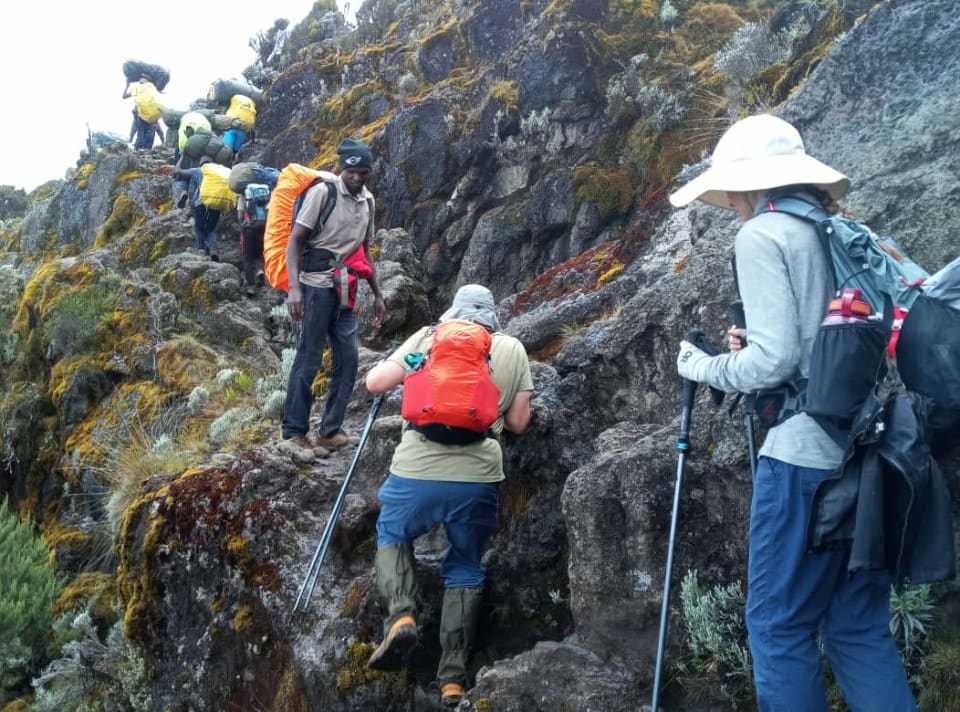
The route is known for its strong acclimatisation profile. At Lava Tower (4,630 metres) you climb high before descending to sleep at Barranco Camp (3,960 metres), a simple pattern that helps your body adapt to altitude. Barranco is also where you meet the Barranco Wall, a hands-on but non-technical scramble with wide views across the southern glaciers. From there the route continues to Barafu Camp (4,673 metres), the base for the summit.

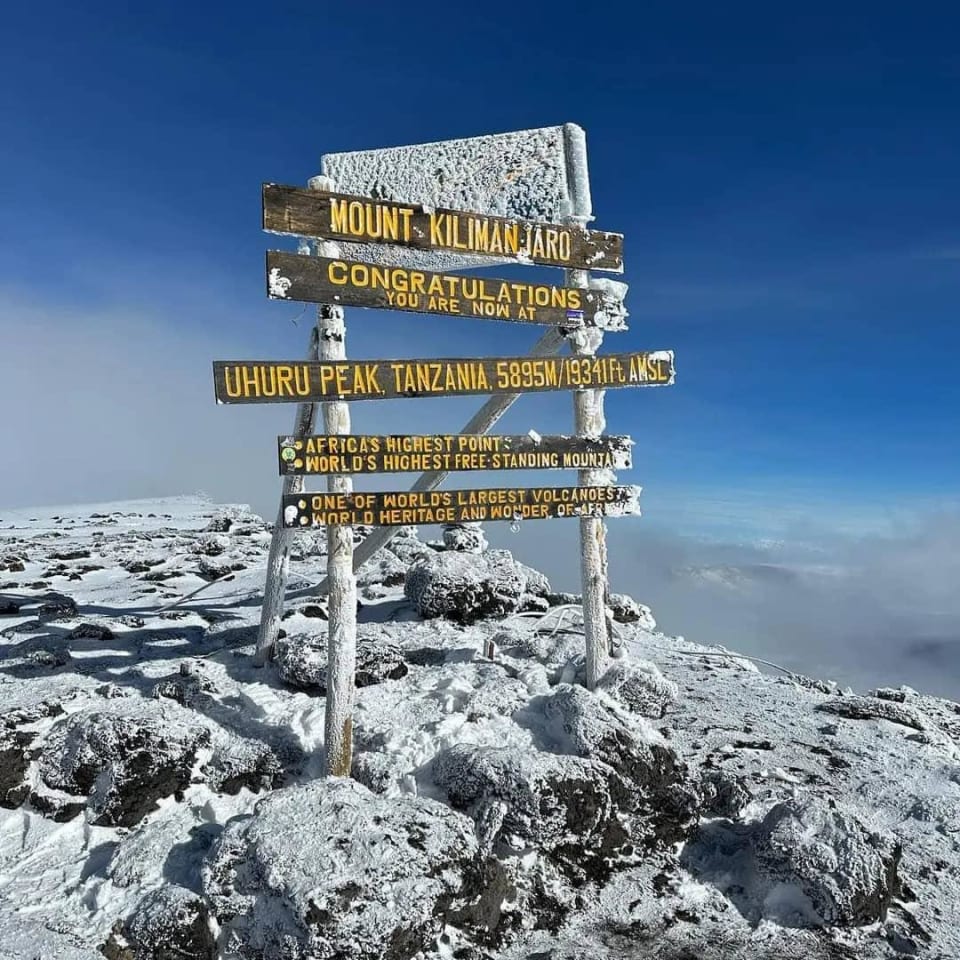
Summit night begins around midnight. You climb slowly in the dark to Stella Point on the crater rim and continue along the rim to Uhuru Peak, the roof of Africa, before descending to Mweka Camp at around 3,100 metres. The descent through the forest on the southern side means you see a different face of the mountain on the way out.

The 6-day Machame suits fit climbers who want the classic Kilimanjaro experience with full camping service in a shorter time. No technical skills are needed, but this is a demanding climb. Climbers who want more acclimatisation time can choose the 7-day Machame, which adds a night at Karanga Camp.

Six days is the practical minimum on Machame, and it suits a specific kind of climber: fit, recently active at altitude, and short of time. The route goes from Machame Gate through rainforest to Machame Camp (about 3,010 m), across to Shira (about 3,840 m), over Lava Tower (about 4,630 m) to Barranco, up the Barranco Wall and straight on to Barafu in one long day. There is no spare night at Karanga, so the stretch from Barranco to Barafu and then summit night come close together.

What you get in return is variety: forest, moorland, a rock desert and the scree of the summit slopes, all in six days, with a descent by the Mweka route. If you can add a day, the seven-day version splits the hardest stretch and most guides prefer it. If six is your limit, the best preparation is training on hills with a loaded pack, walking slowly, and telling your guide at once if a headache or nausea appears. Camping equipment, meals, park fees and transfers are part of the package; the inclusion list on this page is the source of truth.

Who it suits: Fit climbers targeting Uhuru Peak via the classic 6-day Whiskey Route with full camping s…

Altitude affects everyone differently, so no itinerary can promise the summit. A longer schedule gives more time to adjust.

The route in 3D

Camps, gates and the climb on real terrain.

Showing the Machame route only. Typical camps, not for navigation. Trail data © OpenStreetMap contributors. Open full map

Day-by-day itinerary

Times and camps can change with weather and group pace.

  1. Register at Machame Gate and begin the Machame Route (Whiskey Route) with an 11km hike through Kilimanjaro's montane rainforest zone to Machame Camp. Dinner and overnight.

    Walking
    5 to 7 hours
    Climb
    up to 1,180 m
    Sleep
    Machame Camp
    Zone
    montane rainforest
    Meals
    breakfast, lunch, dinner

    Times and heights are approximate and change with pace and weather.

Machame route day by day, in detail

What each stage of this package feels like. Heights are rounded and vary by source.

Day 1 · 08:00 AM

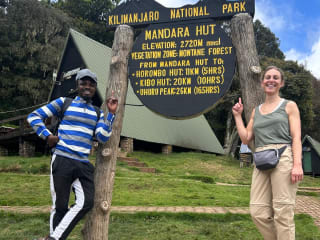
Machame Gate to Machame Camp

You drive from Moshi to Machame Gate, sign the park register and meet the rest of the crew, who weigh and load the bags. The track climbs through montane rainforest: tall trees, hanging moss, and the sound of monkeys you will hear more than see. It is wide, often muddy, and humid, so you walk in a base layer with a rain jacket in the daypack. Expect five to seven hours at a deliberately slow pace.

Machame Camp sits at roughly 3,000 m. Your tent is already up when you arrive and tea arrives soon after. A mild headache this first evening is common; drink water, eat even if you are not hungry, and go to bed early. The temperature drops quickly after sunset.

Day 2 · 07:00 AM

Machame Camp to Shira

The forest ends within the first hour and you step out onto heather and giant groundsel, with the Shira plateau ahead. The day is shorter than the first but steeper, with a rocky ridge before the final stretch. On a clear day the Western Breach and the snow on Kibo are visible across the plateau.

Shira camp stands at about 3,800 m, open to the wind and noticeably cold. This is the first night where a proper sleeping bag matters. If the evening is clear, the stars are extraordinary. Walk slowly, keep your hands and neck warm and tell your guide about any headache.

Day 3 · 07:00 AM

Lava Tower and Barranco: the acclimatisation day

This is the day that does most of the work. You climb across the high moorland to the Lava Tower, a volcanic plug at about 4,600 m, stop for lunch, and then descend steeply to Barranco Camp at about 3,950 m. Going high and sleeping lower is the best natural help your body gets on the mountain.

Some people get a headache or feel nauseous at the tower. If that happens, tell your guide at once and do not push on; the descent usually helps. The valley at Barranco, with its giant senecio plants and the wall rising above camp, is one of the most memorable places on the route.

Day 4 · 07:00 AM

Barranco Wall to Barafu

After the Barranco Wall scramble the route crosses the Karanga valley and climbs on to Barafu, the high camp at about 4,600 m, in a single long day. It is a hard walk through alpine desert with little shelter, and you arrive in the afternoon to rest before the summit push. There is no water at Barafu, so the crew carry it up.

Eat early, drink as much as you can and sleep for a few hours with your boots, gloves, head torch and layers laid out. Summit night starts around midnight.

Day 5 · 12:00 AM

Summit night and descent

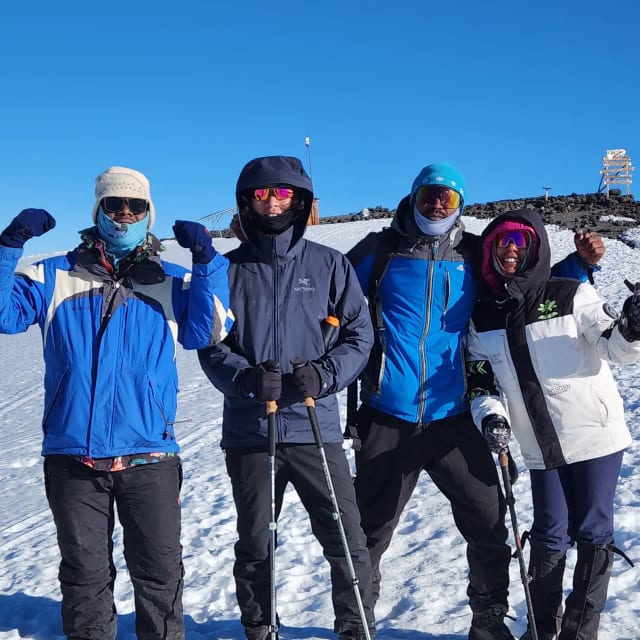
You are woken around midnight, drink something hot and start in the dark by head torch. The path is steep and zigzags up loose scree; the pace is very slow, with frequent pauses. It is freezing, often well below zero, and the hours before dawn are the hardest. Stella Point on the crater rim, at about 5,685 m, is where the sun usually rises and where many people cry.

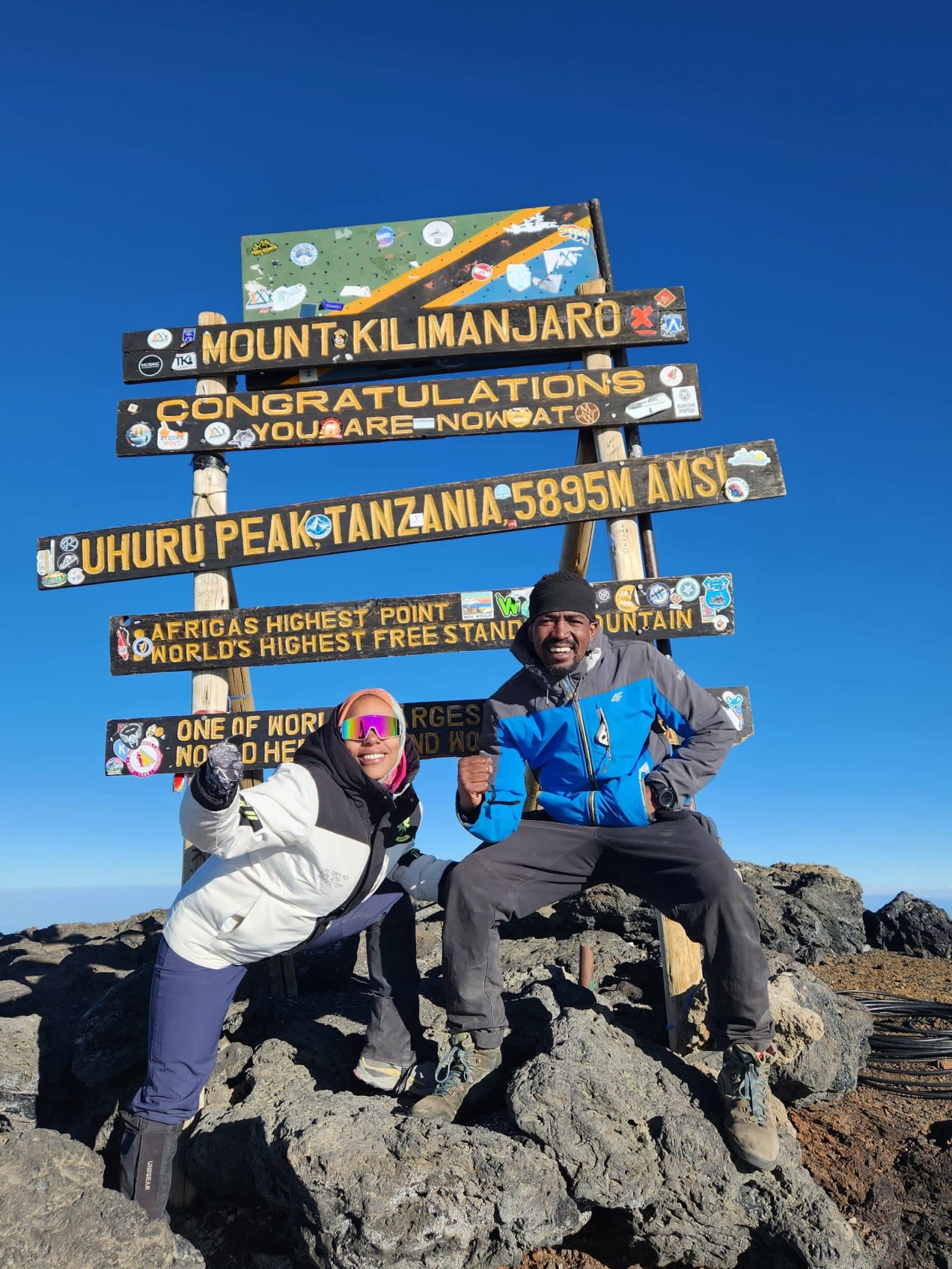
From Stella Point it is a further walk along the rim to Uhuru Peak at 5,895 m, with glaciers and the crater floor beside you. You stay only briefly, take the photograph and turn back, because the descent is long: down the scree to Barafu for a short rest and on to Mweka Camp or Horombo depending on the route. The whole day often takes ten to fourteen hours.

Day 6 · 07:00 AM

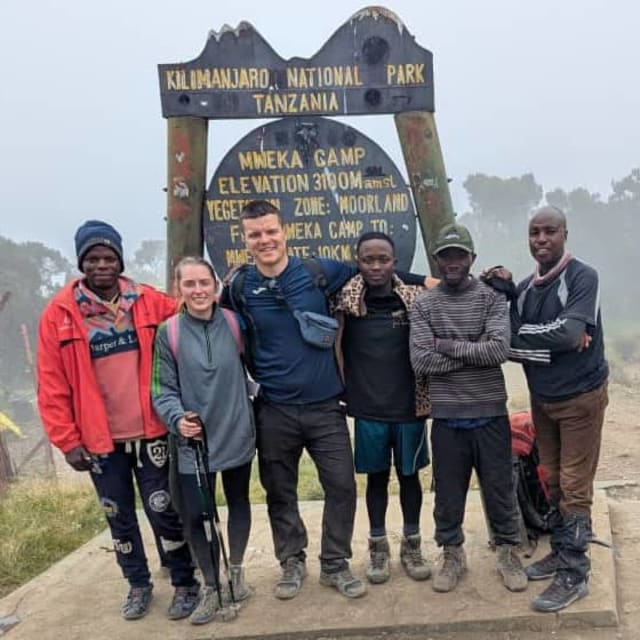
Mweka Camp to the gate

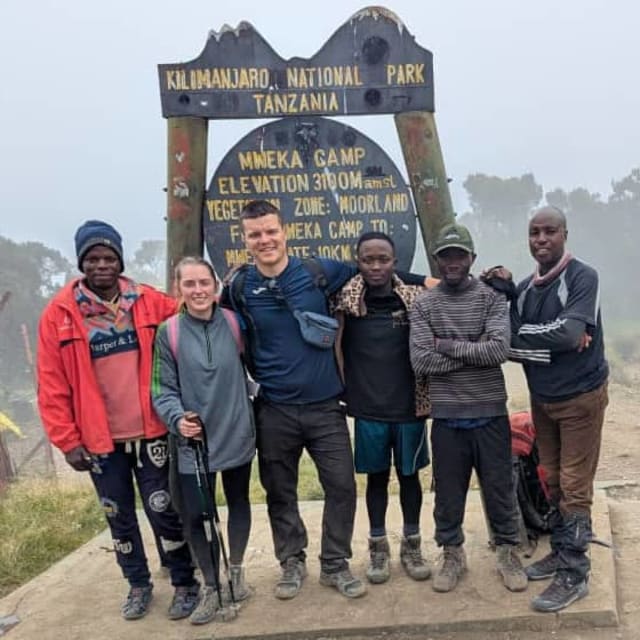
The last morning is a few hours through forest on a well-made path, sore in the knees but easy in the lungs. Trekking poles are most useful here. At Mweka Gate you sign out, receive your summit certificate if you reached Stella Point or Uhuru Peak, and the crew gather for a farewell.

A vehicle then takes you back to your hotel, where you will want a hot shower. Tipping is normally done at the final camp or gate; your operator should give you a written guideline in advance.

What is included

Included

  • All camping equipment (tent, sleeping mat, dining tent)
  • All meals on the mountain (breakfast, lunch, dinner)
  • Experienced lead guide + assistant guide
  • Hotel transfers
  • Kilimanjaro National Park fees
  • Pre-climb briefing & gear check
  • Rescue fee / emergency evacuation insurance
  • International flights
  • Personal expenses and snacks
  • Personal trekking gear
  • Tanzania visa ($50 USD)
  • Tips for guides and porters
  • Travel & medical insurance (required)

Price

Starting price, per person

$1,600

  • Covers everything on the included list.
  • This example is for one traveller; for a group, multiply the price per person by the number of travellers. The card fee is added on the payment page, so the amount you pay there is higher than the deposit. Trips that start within 10 days are paid in full at booking, with no balance.
  • Group size: 1–12 people. Final price depends on group size and dates.
  • Budget separately for: International flights; Personal expenses and snacks; Personal trekking gear; Tanzania visa ($50 USD); Tips for guides and porters; Travel & medical insurance (required).

When to go

Jan to Febbest

Short dry season: clear skies, firm trails

Mar to Mayfair

Long rains: muddy trails, reduced visibility

Jun to Octbest

Long dry season: peak trekking season

Nov to Decgood

Short rains: quieter, occasional showers

Know before you go

What to read before you book.

Why Choose the 6-Day Machame Route?

The 6-day Machame Route is the most popular Kilimanjaro summit itinerary for experienced trekkers. It offers excellent scenery, a strong acclimatization profile through the Lava Tower day and the iconic Barranco Wall scramble. The climb high, sleep low structure on Day 3 gives your body critical high-altitude exposure before summit night.

Quick Overview

Day 1: Rainforest to Machame Camp (3,010m). Day 2: Shira Plateau (3,840m). Day 3: Lava Tower (4,630m) → Barranco Camp (3,960m). Day 4: Barranco Wall → Barafu (4,673m). Day 5: Midnight summit Uhuru Peak (5,895m) → Mweka Camp. Day 6: Descent & certificate.

What's Included and What's Not

What's included:

  • Kilimanjaro National Park fees, camping fees, and rescue fees
  • A licensed, English-speaking mountain guide and support crew
  • Porters to carry group and camping equipment
  • Meals on the mountain (breakfast, lunch and dinner daily)
  • Camping equipment for the group (tents, dining tent)
  • Return transfers between Moshi and Machame Gate
  • Summit certificate on successful completion

What's not included:

  • International and domestic flights
  • Visa fees
  • Travel insurance (including emergency evacuation cover)
  • Tips for your guide, cooks and porters: see our porter welfare and tipping guide for realistic amounts
  • Personal trekking gear (see packing guidance below)
  • Pre- or post-climb accommodation in Moshi
Physical Fitness & Training for Machame

The Machame route is a non-technical trek, no ropes, harnesses or climbing experience are required, but it is a genuinely demanding multi-day hike at altitude, not a casual walk. Day 3 (Shira Cave Camp to Barranco Camp via Lava Tower) and the Barranco Wall scramble on Day 4 are the two most physically testing sections, involving several hours of steady ascent and a short hands-on-rock scramble that, while not technical climbing, does require reasonable upper-body coordination and a head for exposure.

Realistic preparation means building cardiovascular endurance (hiking, running, cycling or stair training) and time on your feet: back-to-back long walking days are better preparation than short daily gym sessions alone. Strength training for your legs and core helps with the steep, loose-scree sections. For a full training plan, see our Kilimanjaro training guide.

The Five Climate Zones You'll Cross

Machame Gate sits at roughly 1,800m, already higher than most European mountain villages, and the route climbs through five distinct ecological zones on the way to Uhuru Peak at 5,895m:

  • Rainforest (roughly 1,800m–2,800m): the first day's hiking, humid and green, with a real chance of rain regardless of season
  • Heath and moorland (roughly 2,800m–3,500m): the vegetation thins quickly and the terrain opens up
  • Semi-desert / alpine desert (roughly 3,500m–4,000m): sparse, rocky, with cold nights and strong sun during the day
  • Alpine desert proper (roughly 4,000m–5,000m): where Barafu Camp sits, and where the air is noticeably thinner
  • Arctic zone (above roughly 5,000m): glaciers, scree and freezing overnight temperatures on summit night itself

This isn't just scenery: each zone change is also a real altitude jump, which is why the itinerary's pacing matters more than raw fitness alone. Understanding what altitude sickness actually is, and how the body's acclimatisation process works, is worth reading before you climb.

6 Days vs 7 Days: Why the Extra Night Matters
More days means more time for your body to acclimatise before the summit push, which is the single biggest factor in whether climbers turn back.

The 6-day Machame itinerary shown here is a well-tested, moderately-paced route that plenty of reasonably fit trekkers complete successfully. If you'd rather stack the odds further in your favour, the extra acclimatisation night on our 7-day Machame itinerary is the single change most likely to improve your personal odds.

Porter Welfare on Your Climb

Every climber on Machame is supported by a team of porters who carry group equipment, food and camping gear between camps: typically far more of them than most first-time climbers expect, since Kilimanjaro National Park sets load limits per porter for safety reasons. How an operator treats its porters is one of the more meaningful, if less visible, differences between operators on this mountain.

For a full explanation of porter welfare on Kilimanjaro, how tipping actually works, and realistic tip amounts for your guide, cooks and porters, see our porter welfare guide.

What to Pack for the Machame Route

Machame is a camping route, not a hut-based route like Marangu: you'll be sleeping in tents for all six nights, which changes what's worth packing compared with a hut climb. A warm, four-season-rated sleeping bag matters more here than on Marangu, since you're relying on it for warmth at camps that regularly drop below freezing overnight from Barranco Camp upward. Layering is the other non-negotiable: temperatures swing from humid rainforest heat on Day 1 to well below freezing on summit night.

Beyond clothing: sturdy, broken-in hiking boots, trekking poles, a headtorch with spare batteries for the midnight summit push, sunglasses and high-SPF sun protection, and a reusable water bottle. For a full checklist, see our Kilimanjaro packing list guide or our gear rental guide if you'd rather rent locally.

Before you go

About the Machame route

Machame is the climb most people picture when they think of Kilimanjaro: forest, a long moorland day, a wall you scramble up with your hands, and a midnight start on the south face. Here is what it is actually like, and who should pick something else.

Days
6 or 7 on the mountain
Sleeping
Tents
Starts
Machame Gate, south-west
Finishes
Mweka Gate
Highest sleep
Barafu, about 4,600 m
Crowds
Busy in the dry months

Read the full Machame route guide

Other Machame route packages

Same trail, different length or starting point.

Questions about this trip

  • The Lava Tower acclimatization day is a key factor. Our guides monitor each climber's progress and adjust pace accordingly.

Want to add to this trip?

Compare similar trips

Compare side by side

From, per person$1,600

Check price

Registered & Recognized By